
Now is the time to steer your business’s financial ship with precision.
Year-end business planning is not just about maintenance; it’s about strategically navigating through unpredictable waters to ensure prosperity.
“The biggest advantage of starting year-end planning in Q3 is having options. Once December arrives, business owners may know what their numbers look like, but they have far less time to do something about them.” Adam Allan, CPA
When should businesses start year-end planning?
Business leaders should begin year-end financial and tax planning in the third quarter, ideally between July and September. Starting before Q4 gives owners and their CPAs time to review financial performance, update forecasts, identify tax-planning opportunities, manage cash flow, and make business decisions before December deadlines limit their options.
What can you do?
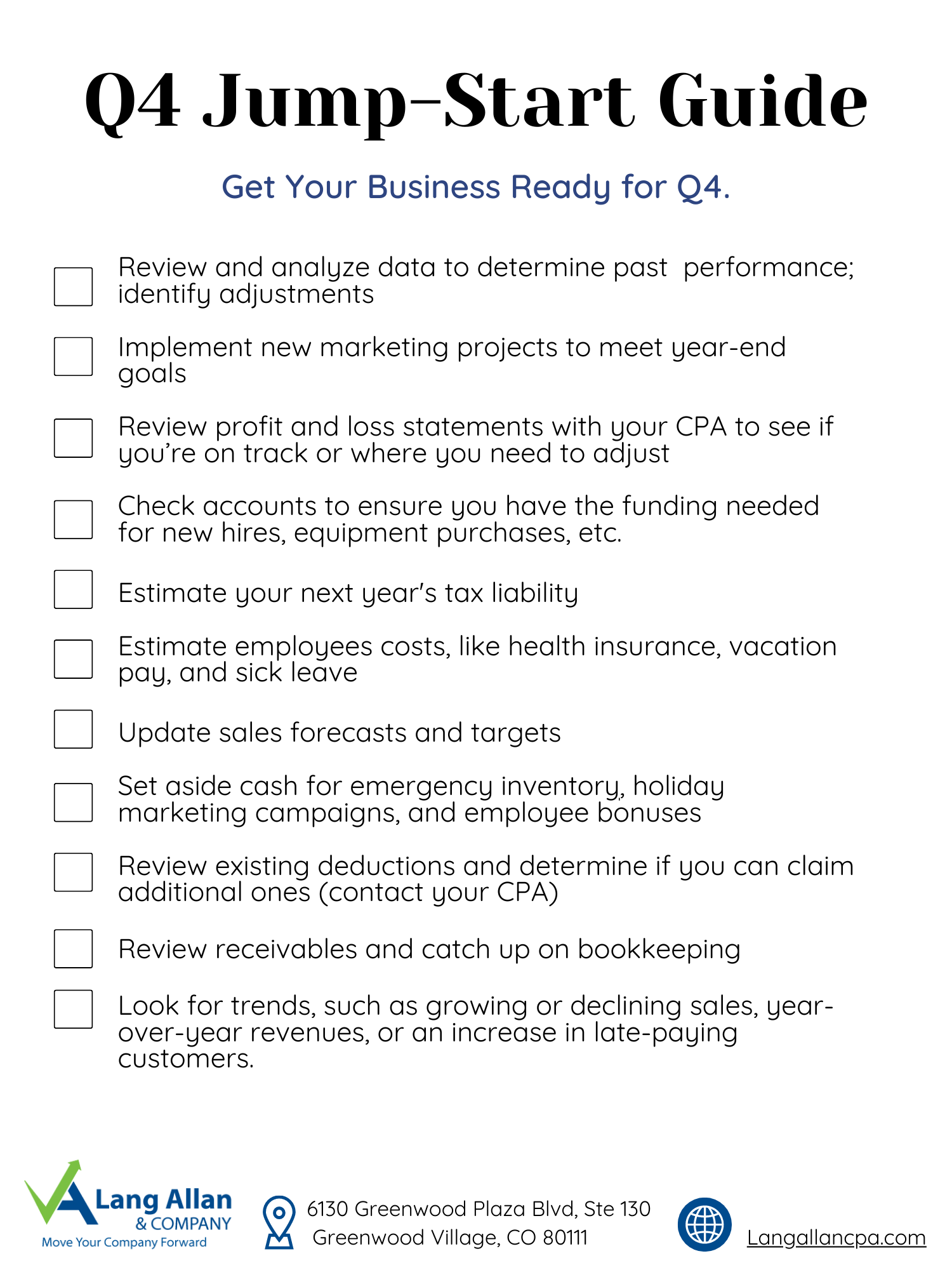
Here are essential steps to make the most out of Q3. We’ve also created a Q4 Jump-Start Guide you can download to keep your planning in check.
Review Your Year-to-Date Financial Performance
Assess your financial performance of the first two quarters. Is your spending aligned with your budget? Now’s the time to make necessary adjustments and calibrate your financial goals to ensure your expenses don’t outpace revenue.
Identify Year-End Tax Planning Opportunities
Consider any new tax regulations that may have come into play since the year began. Consult with us to optimize tax-saving strategies. Regularly setting aside funds for tax liabilities can also keep you on track.
Review Cash Flow
Efficient cash flow management is the buoy that keeps your business afloat. Conduct a cash flow analysis to identify patterns, optimize receivables, and evaluate payment terms. This supports more informed decisions about growth and investment.
Prepare for the Unexpected
Build a contingency plan to deal with unforeseen challenges. This includes maintaining an emergency fund and ensuring your insurance policies are up to date.
Set Q4 Priorities and Begin Planning for Next Year
Establish well-defined objectives for the final stretch of the year. Focus on high-impact actions that drive growth and profitability.
Year-End Planning Checklist
Q3 is the opportune time to evaluate the financial health of your business. With careful planning and a focus on actionable insights, you can chart a course not just for stability, but for triumphant success.
- Review year-to-date revenue and expenses against budget.
- Estimate full-year revenue and taxable income.
- Update your cash flow forecast.
- Review accounts receivable and outstanding debt. Identify potential tax-planning opportunities.
- Review planned equipment or capital purchases. Evaluate payroll and owner compensation.
- Review retirement plan contributions. Discuss major business changes expected before year-end.
- Establish Q4 financial priorities. Begin building next year’s budget and forecast.
- Meet with your CPA before year-end decisions become time-sensitive.
What to Bring to Your CPA
What should you bring to a Q3 planning meeting with your CPA?
- Current profit and loss statement.
- Current balance sheet.
- Year-to-date payroll reports.
- Accounts receivable and payable reports.
- Major purchases planned before year-end.
- Expected changes in revenue or expenses.
- Information about loans or financing.
- Planned owner distributions or compensation changes.
- Major business changes expected next year.
FAQs
Why should businesses meet with their CPA in Q3?
Meeting with your CPA in Q3 gives you time to review year-to-date results, estimate taxable income, identify potential tax-saving opportunities, and make financial decisions before year-end. Planning early gives you more time to act, not react, in December.
Is Q4 too late for year-end tax planning?
No, but waiting until Q4 can limit your options. Some tax strategies, business purchases, retirement contributions, and other financial decisions require time to evaluate and implement. Starting in Q3 gives you and your CPA more flexibility before key year-end deadlines.
How can a CPA help with year-end business planning?
A CPA can help you review financial performance, forecast year-end income, estimate tax obligations, identify planning opportunities, evaluate cash flow, and prepare for the year ahead. The goal is to turn your financial data into informed business decisions before December 31.
Year-End Business Planning for Colorado Business Owners
For Colorado business owners, year-end planning should consider both federal tax strategy and Colorado-specific tax requirements. Business leaders should also consider how expected growth, hiring, capital purchases, owner compensation, and changes in taxable income may affect their year-end position.
Reach out to us to help you chart that course. Don’t wait until Q4, when you’re scrambling to get too much done before year-end.